
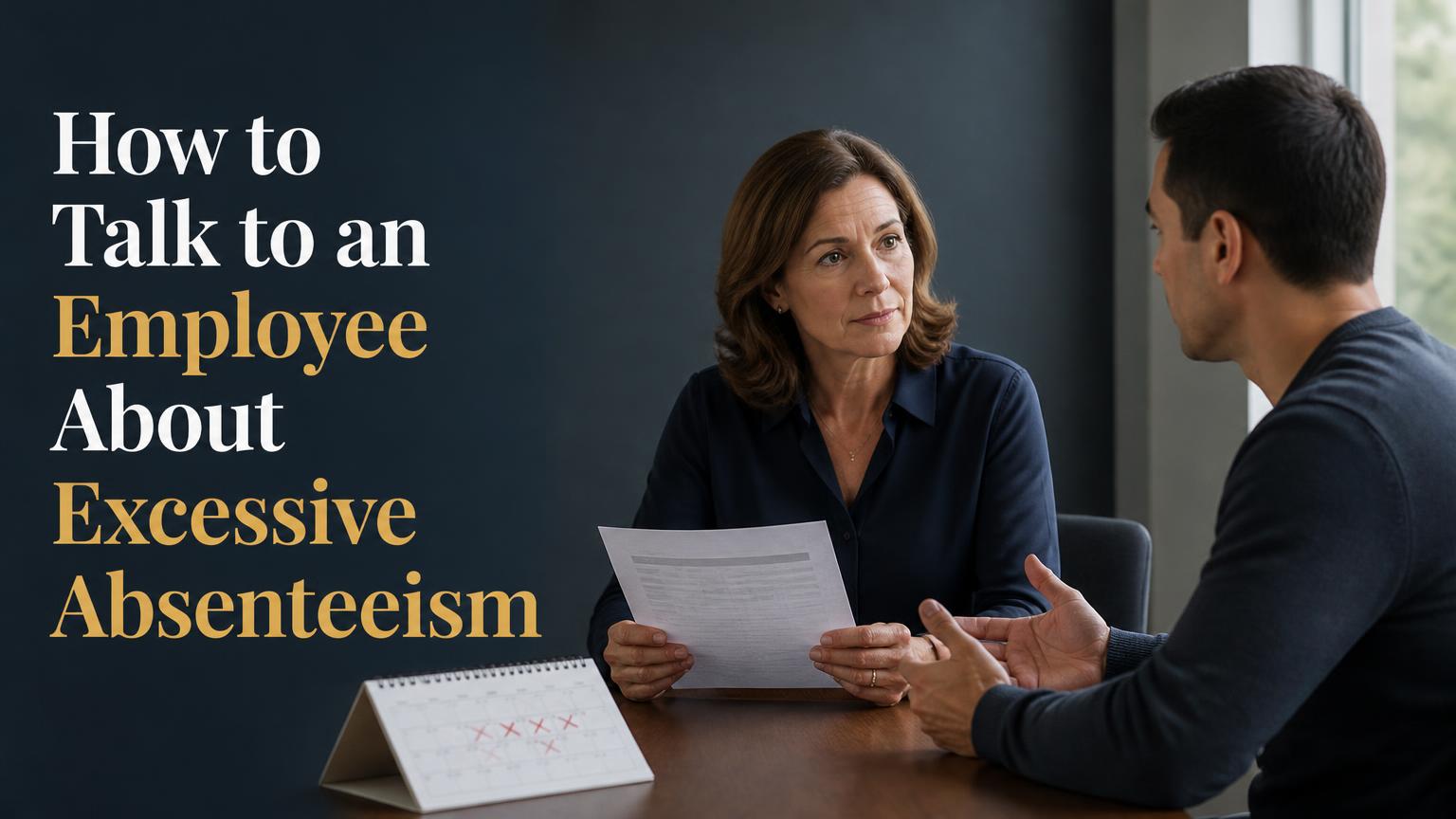
Frequent absences can put pressure on coworkers, disrupt service, and make planning difficult. They can also result from illness, caregiving responsibilities, workplace conditions, or circumstances a manager does not fully understand. A conversation about attendance should therefore be direct without becoming accusatory. The goal is to establish the facts, understand what may be affecting attendance, apply workplace rules fairly, and agree on a workable path forward. The following process helps managers address excessive absenteeism while protecting the employee’s dignity and maintaining reasonable accountability.
How to Talk to an Employee About Excessive Absenteeism: A Practical Process
#1. Review the Attendance Facts Before the Meeting
Begin with accurate information rather than impressions. Review the dates of absences, late arrivals, early departures, call-in records, and any relevant attendance expectations. Look for a pattern: frequent Mondays or Fridays, repeated short-notice absences, extended periods away, or attendance problems that followed a change in schedule or workload.
Separate documented facts from assumptions. “You have missed six scheduled shifts in the last eight weeks” is more useful than “You are never here.” Also confirm whether any absences were approved, covered by available leave, connected to a workplace incident, or already under review with HR. If your records are incomplete, correct them before raising the issue.
You should also understand the purpose of the meeting. It is not a trial designed to prove misconduct. It is an opportunity to discuss a significant attendance concern, hear the employee’s perspective, and determine what action is appropriate under the organization’s policies and procedures.
#2. Check Policies and Involve the Right Internal Resources
Before speaking with the employee, review the attendance policy and any established process for handling repeated absences. Check what the policy says about notification, documentation, sick leave, attendance monitoring, progressive discipline, and return-to-work discussions. Apply the same general standard used for comparable situations, while recognizing that individual circumstances may require different support or review.
Contact HR or the appropriate internal resource before the meeting when the absences may involve medical information, disability, pregnancy, family-care responsibilities, workplace injury, statutory or protected leave, or an accommodation request. Managers do not need to diagnose a condition or decide independently whether an absence is protected.
Keep the discussion focused on attendance and work impact rather than asking for unnecessary private details. If the employee shares sensitive information, listen respectfully and explain that you will involve the appropriate resource rather than promising a particular outcome. This protects the employee and helps the manager avoid making commitments outside their authority.
#3. Schedule a Private, Constructive Conversation
Arrange a private meeting at a reasonable time and give the employee enough notice to prepare. A sudden confrontation in front of colleagues can create embarrassment and make a productive discussion less likely. You can describe the purpose without presenting a conclusion in advance.
For example, a manager might say:
I’d like to meet with you privately to discuss your recent attendance and how it has affected scheduling. I want to review the attendance record, understand whether there are circumstances we should be aware of, and discuss the expectations going forward.
Choose a setting where the conversation cannot easily be overheard. Allow enough time so neither person feels rushed, but avoid scheduling the meeting during a crisis or immediately after the employee returns from an absence unless there is a practical reason to do so.
Use a calm, matter-of-fact tone. The purpose of the meeting is not to demonstrate authority through anger. A serious attendance issue can be addressed firmly while still treating the employee as a person entitled to be heard.
#4. Describe the Attendance Concern Specifically
Open with the observable facts and explain the practical effect of the attendance pattern. Avoid labels such as “unreliable,” “uncommitted,” or “difficult.” Those labels attack character and invite an argument about motives instead of a discussion about conduct.
A useful structure is:
- State the documented attendance pattern.
- Explain the effect on the team, customers, deadlines, or scheduling.
- Restate the relevant expectation.
- Invite the employee’s response.
You might say:
Our records show that you have missed seven scheduled shifts in the past two months, including three occasions when notice was provided after the shift had started. This has required last-minute coverage and has delayed parts of the team’s work. The attendance expectation is that employees notify their supervisor as soon as they know they cannot attend, using the required call-in process. I’d like to understand what has been contributing to this pattern.
Keep the facts proportionate and precise. If there are errors in the record, be willing to correct them. If the problem is not just the number of absences but the failure to follow notification procedures, identify both issues separately.
#5. Listen for Relevant Circumstances Without Pressuring the Employee
After describing the concern, pause and give the employee room to respond. Some employees will explain a temporary problem immediately; others may be embarrassed, uncertain, or worried that disclosure will harm their position. Listening does not mean accepting every explanation without review, but it does mean gathering information before deciding what happens next.
Ask open, work-related questions such as:
- “Is there something affecting your ability to attend consistently?”
- “Have you had difficulty using the call-in procedure?”
- “Is there information you believe HR or another internal resource should review?”
- “What would help you meet the schedule reliably?”
- “Are there scheduling or workplace issues contributing to the problem?”
Do not demand a diagnosis or invite unnecessary medical detail. If the employee says the absences relate to a health condition or family circumstance, acknowledge the information and explain the next step:
Thank you for telling me. You do not need to discuss private medical details with me. I’d like to involve HR so we can review what support or process may apply. For now, let’s also make sure we are clear about how and when to report an absence.
Take notes focused on relevant facts, requests, and agreed actions. Do not record personal speculation or dismissive judgments. If the employee denies the attendance record, compare the information carefully rather than treating disagreement as proof of dishonesty.
#6. Set Clear Expectations and Agree on Practical Support
Once you understand the situation, explain what must change. Expectations should be specific enough that both parties can tell whether improvement has occurred. Depending on the circumstances, this may include attending scheduled shifts, giving notice by a stated time, using a particular reporting method, providing documentation when policy requires it, or communicating promptly about a change in circumstances.
Support may include a review of scheduling, a referral to HR, clarification of leave procedures, temporary adjustments within the manager’s authority, or a written attendance plan. Do not offer arrangements you cannot approve or guarantee. Make clear which actions are immediate and which require further review.
A manager could say:
Going forward, you are expected to attend your scheduled shifts and follow the call-in procedure whenever you cannot do so. If an ongoing issue may affect your attendance, please speak with HR so it can be reviewed appropriately. I will confirm the next steps with you after that review, and we will meet again on [date] to discuss how things are progressing.
The plan should also address operational needs. If the employee cannot attend, who must be contacted? How much notice is expected? What information should be handed over? Clear procedures reduce confusion and prevent the discussion from becoming a vague request to “do better.”
#7. Document the Conversation and Follow Up Consistently
After the meeting, document the date, attendance facts discussed, the employee’s relevant response, expectations communicated, support or referrals offered, and the agreed follow-up date. Keep records factual and secure. Do not include unnecessary personal information, informal judgments, or details that belong in a confidential HR process.
Send a concise written summary when appropriate. It should confirm what was discussed without overstating conclusions. For example:
We discussed your attendance record from [date] through [date], including [number] absences and [number] occasions involving late notification. We reviewed the expectation that scheduled shifts be attended and that absences be reported through [procedure] as soon as possible. You indicated that [brief relevant summary]. You will [agreed action], and I will [manager action]. We will meet again on [date] to review progress.
Follow up when promised, not only when another absence occurs. Recognize improvement briefly and address continuing problems promptly. If attendance does not improve, use the established process and consult HR before taking formal action. Consistency matters: ignoring the issue for months and then reacting harshly to one incident can appear unfair and weaken trust.
When Absenteeism May Require a Different Approach
Not every attendance problem should be handled as a straightforward performance issue. The same number of absences can have different implications depending on whether the employee failed to follow a reporting procedure, used approved leave, experienced a workplace injury, requested an accommodation, or faced a temporary personal emergency. Managers should avoid making a final judgment before checking the relevant facts.
A careful approach also protects the broader team. Coworkers may be frustrated by extra workload, but they do not need private information about the absent employee. Explain only what is necessary about scheduling and coverage. Do not ask colleagues to investigate, speculate about the employee’s health, or discuss whether the absences are “real.”
If the employee raises a potentially protected issue, refer it through the appropriate internal process. If the organization lacks a clear process, ask HR or a responsible senior leader for guidance before proceeding. The manager can continue to address observable attendance expectations while another resource reviews confidential circumstances.
How to Respond to Difficult Reactions
An employee may become defensive, angry, tearful, or unusually quiet. Keep your tone steady and return to the purpose of the conversation. Do not argue about the employee’s character or respond to anger with threats. If the discussion becomes unsafe or impossible to continue, pause it and arrange a follow-up with HR or another appropriate person present.
If the employee says, “Everyone is targeting me,” acknowledge the concern without abandoning the facts:
I understand that this conversation feels difficult. I am raising it because of the attendance record and its effect on the schedule, not because I am making a judgment about you personally. I want to hear your perspective and make sure we follow the appropriate process.
If the employee says the records are wrong, identify the specific entries and invite supporting information. If the employee offers a reason but does not want to discuss details, respect that boundary while explaining the available process:
You do not have to share private details with me. If the situation may affect your ability to work or your leave status, HR can explain what information or documentation is needed and what options may be available.
The manager’s responsibility is not to win the conversation. It is to maintain a fair process, clarify expectations, and ensure that the next decision rests on verified information.
Closing Thoughts
Talking to an employee about excessive absenteeism requires both firmness and restraint. Start with reliable facts, describe the work impact, listen without demanding private information, and distinguish ordinary attendance concerns from circumstances requiring HR review. Then set specific expectations, offer appropriate support, document the discussion, and follow up consistently. A respectful conversation does not remove accountability; it makes accountability more accurate, more transparent, and more likely to produce a workable result.