
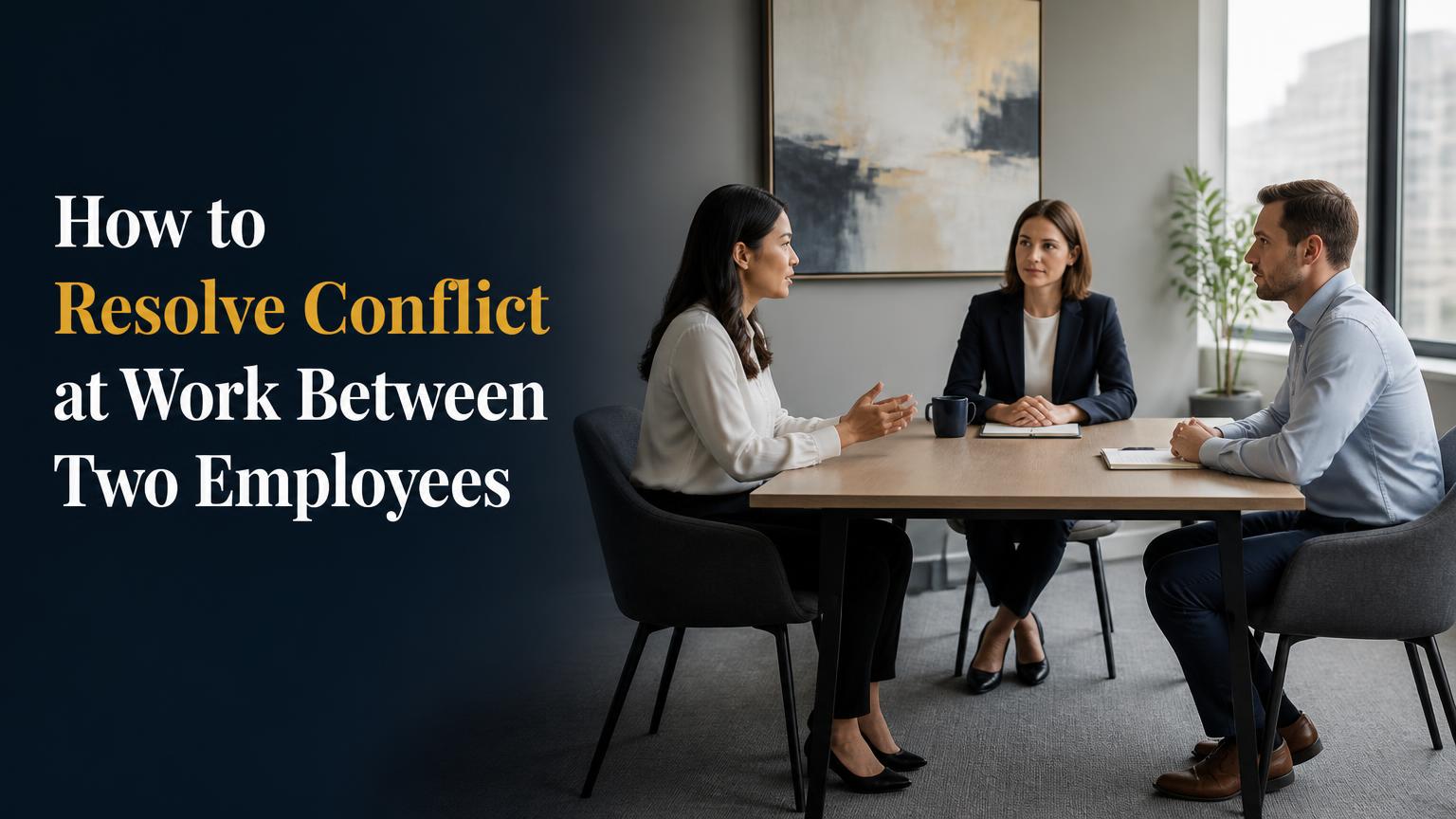
Conflict between two employees can quickly affect an entire team. Meetings become tense, communication becomes cautious, and managers may find themselves hearing competing versions of the same event. The goal is not to decide who is “the difficult person” or force an artificial friendship. It is to understand what happened, address the conduct that is causing harm, and establish a workable standard for future interactions. The following process helps managers resolve conflict fairly while preserving accountability, dignity, and the team’s ability to work effectively.
How to Resolve Conflict at Work Between Two Employees
#1. Assess the Situation Before Intervening
Start by determining whether you are dealing with a disagreement, a recurring conflict, or conduct that requires immediate escalation. A difference of opinion about priorities may be resolved through clarification. Repeated interruptions, hostile messages, exclusion, threats, harassment, or retaliation may require involvement from HR or another designated workplace resource.
Gather basic facts without making premature judgments. Identify who is involved, what was observed or reported, when the incidents occurred, and how the conflict is affecting work. Separate observable behavior from interpretations. “Jordan interrupted Casey three times during the project meeting” is more useful than “Jordan does not respect Casey.”
Consider whether the issue is urgent. If someone feels unsafe, if there are threats, or if serious misconduct may have occurred, do not treat the matter as an ordinary communication problem. Follow your organization’s established procedures and involve the appropriate person promptly.
#2. Speak With Each Employee Separately
Meet with each employee privately before bringing them together. Individual conversations give people room to explain their perspective without feeling embarrassed, defensive, or pressured to respond immediately to the other person.
Use open questions, then narrow the discussion toward specific events. Ask what happened, what the employee said or did, what they observed from the other person, and how the situation affected the work. Also ask what outcome they want and what they believe they could do differently.
A useful opening might be:
I want to understand what has been happening between you and Casey. Please describe the specific situations that concern you, including what was said or done and when it occurred. I will also speak with Casey so I can consider both perspectives before deciding on next steps.
Listen carefully, but do not promise absolute confidentiality if the matter may require further action. Explain that you will handle the information appropriately and share details only as necessary to address the workplace issue.
#3. Identify the Actual Source of the Conflict
Many workplace conflicts appear personal but are intensified by unclear responsibilities, competing deadlines, limited resources, inconsistent instructions, or different expectations about how work should be done. If you address only the tone of the disagreement, the same conflict may return when the underlying pressure remains.
Compare the employees’ accounts and look for points of agreement. They may disagree about motives but agree that a deadline was missed, a decision was not communicated, or responsibilities overlapped. Those shared facts provide a more productive starting point than debating whether one person is disrespectful or uncooperative.
Consider several possible sources:
- Unclear ownership of a task or decision
- Different standards for quality, speed, or communication
- A history of unresolved incidents
- Conflicting instructions from different managers
- Personal remarks or behavior that crossed a professional boundary
- A workload, scheduling, or resource problem
Do not assume the conflict is equally caused by both employees. Fairness means examining the conduct and circumstances rather than dividing blame automatically.
#4. Set Clear Standards for Future Conduct
Before arranging a joint conversation, decide what professional behavior must occur going forward. Standards should be specific enough that both employees know what to do, not merely what attitude to display.
For example, “Be more respectful” is vague. A clearer expectation might be: “During project meetings, allow the speaker to finish before responding,” or “Raise concerns about the draft directly with the project owner rather than criticizing the colleague in a group chat.”
Explain which behaviors must stop, which behaviors should replace them, and how concerns should be raised. The standards may include:
- Addressing work issues directly and privately when appropriate
- Using factual language instead of personal labels
- Confirming task ownership in writing
- Bringing unresolved disagreements to the manager after attempting a direct discussion
- Avoiding sarcasm, public criticism, interruptions, or hostile messages
If one employee clearly violated a workplace expectation, do not hide that fact behind vague language about “both sides.” You can support a productive resolution while still holding an individual accountable for specific conduct.
#5. Facilitate a Focused Joint Conversation
Bring the employees together only when the conversation can be conducted safely and productively. As the manager, establish the purpose and ground rules at the beginning. The goal is not to force agreement about every past event. It is to clarify the work problem, acknowledge relevant impact, and agree on future conduct.
Keep the discussion focused on events and consequences. Interrupt personal accusations and redirect the speakers toward what they need from one another to complete the work.
You might say:
We are here to resolve the work problem, not to determine who has the worse personality. I will ask each of you to describe specific conduct, explain its effect on the work, and identify what needs to change. We will speak one at a time, avoid personal labels, and leave with clear agreements.
Allow each employee to speak without interruption, but do not let the meeting become a lengthy prosecution of the other person. Summarize points of agreement and disagreement. If the conversation becomes hostile or unproductive, pause it and determine whether another process is needed.
#6. Agree on Specific Actions and Boundaries
A conflict is not resolved merely because both employees have expressed their feelings. End the conversation with concrete agreements about responsibilities, communication, and escalation.
Document the agreements in neutral language. Depending on the situation, they might include:
- Who owns each part of the project
- How and when updates will be shared
- Which communication channel should be used for urgent issues
- How disagreements about quality or priorities will be raised
- What each employee will do if a concern remains unresolved
- When the manager will review progress
Ask each person to confirm what they are agreeing to do. A manager might summarize:
Casey will send the revised schedule by Wednesday afternoon. Jordan will review it and send questions directly to Casey rather than raising concerns in the team channel. If they cannot agree on a deadline, they will bring the specific options to me before committing the team.
Make sure the agreement is realistic. Do not require employees to socialize, share personal information, or pretend that the conflict never occurred. The standard is professional cooperation, not personal closeness.
#7. Follow Up and Address Recurrence
Schedule a follow-up rather than assuming the matter is settled. A brief check-in after one or two weeks can reveal whether the agreement is working, whether new problems have emerged, and whether either employee needs clarification or support.
Measure progress through behavior and work results. Are meetings more orderly? Are tasks being completed without avoidable disputes? Are concerns being raised through the agreed process? Avoid asking only whether the employees “get along,” because effective cooperation does not require friendship.
If the conflict continues, return to the specific agreement and identify what was not followed. Address repeated conduct consistently and document relevant incidents according to normal workplace procedures. Do not allow repeated mediation meetings to become a substitute for accountability when one employee continues to disregard clear expectations.
If the issue involves harassment, discrimination, threats, retaliation, violence, or another serious concern, use the appropriate internal reporting and investigation process. Ordinary conflict resolution is not a replacement for formal action when the circumstances require it.
What to Do When One Employee Denies Any Responsibility
Denial does not automatically mean that the employee is dishonest, nor does it end the manager’s responsibility to act. People may remember the same interaction differently, may focus on different parts of it, or may believe their behavior was justified by the circumstances. Keep the discussion grounded in conduct that can be described and evaluated.
Ask the employee to respond to specific observations rather than a broad accusation. Instead of saying, “You are causing conflict,” say, “In Tuesday’s meeting, you spoke over Casey while Casey was presenting the client update. What is your recollection of that exchange?” This gives the employee an opportunity to explain without turning the conversation into a judgment of character.
You can also distinguish intent from impact. An employee may say, “I was only trying to keep the meeting on schedule.” The manager can acknowledge that possible intent while still addressing the result: “I understand that was your concern. The expectation is that you raise the time issue without interrupting the presenter.”
If facts remain disputed, do not invent certainty. State what is established, explain the standard that applies regardless of intent, and set expectations for future behavior. A manager can require employees to follow a professional process even when the history of the disagreement cannot be reconstructed perfectly.
A Practical Script for Starting the Resolution Meeting
A structured opening helps prevent the conversation from becoming an unplanned argument. The manager should explain why the meeting is taking place, describe the desired outcome, and establish rules that apply equally to both employees.
Adapt the wording to the situation and your normal management style:
Thank you for meeting with me. The purpose of this discussion is to address the repeated difficulty between you and agree on how you will work together from this point forward.
I will give each of you time to describe the specific events you believe are relevant. Please avoid interruptions, personal labels, and assumptions about motives. Focus on what was said or done and how it affected the work.
After we hear both perspectives, we will identify the points that need to change and agree on practical steps. This meeting is not about forcing you to become friends. It is about establishing professional behavior and a reliable way to handle disagreements.
If one person interrupts, intervene calmly rather than waiting for the exchange to deteriorate:
Please let Casey finish. I will make sure you have an opportunity to respond, but we need to hear one account at a time.
If the employees begin arguing about motives, redirect them:
We may not be able to establish what each person intended. Let us return to the observable behavior and decide what should happen in similar situations going forward.
When Mediation Is Not the Right First Response
A joint meeting is not appropriate for every conflict. If there is a significant power imbalance, a credible threat, fear of retaliation, or an allegation of serious misconduct, asking the employees to “work it out” may place an unfair burden on the more vulnerable person. In those circumstances, consult HR or the responsible internal function before arranging a direct conversation.
Formal procedures may also be necessary when the conflict involves discrimination, harassment, violence, threats, retaliation, theft, or deliberate sabotage. The precise process will depend on the organization and the facts. The important point is to avoid treating potentially serious conduct as a simple personality clash.
Managers should also recognize when they are too close to the matter to lead the discussion impartially. If the manager has participated in the conflict, has a strong personal relationship with one employee, or may be a witness to disputed events, another qualified person may need to handle the review.
That does not mean every disagreement requires a formal investigation. It means the response should match the seriousness and complexity of the situation. Early, direct management is often appropriate for ordinary friction; safety concerns and serious allegations require a more careful process.
Closing Thoughts
To resolve conflict at work between two employees, focus less on deciding who is the “problem” and more on clarifying what happened, what conduct must change, and how the work will proceed. Speak with each employee privately, address observable behavior, correct unclear responsibilities, and facilitate a focused agreement. Then follow up and respond consistently if the conflict returns. Professional resolution does not require personal harmony. It requires clear expectations, fair treatment, and dependable accountability.