
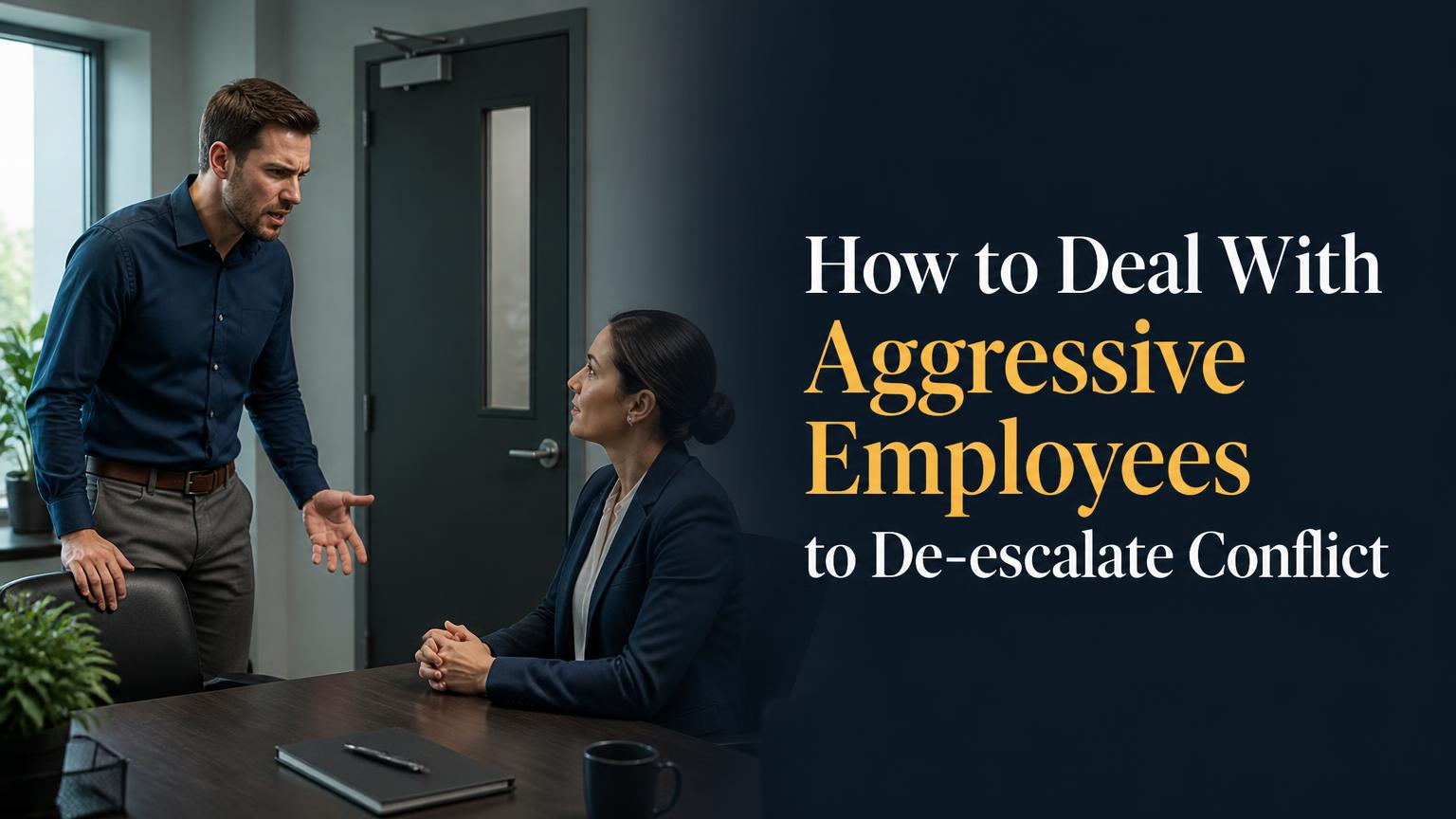
Aggressive behavior at work can unsettle an entire team, especially when anger appears in meetings, emails, customer interactions, or one-to-one conversations. The challenge is to respond firmly without provoking a larger confrontation or treating ordinary disagreement as misconduct. Managers and colleagues need a practical way to assess risk, calm the immediate situation, document what occurred, and address the underlying workplace issue. The goal is not to “win” an argument. It is to restore safety, clarify expectations, and decide what responsible action should follow.
How to Deal With Aggressive Employees in the Workplace Without Escalating Conflict
#1. Assess Immediate Safety Before You Try to Resolve the Issue
Before focusing on communication, determine whether anyone is in immediate danger. Threats of violence, physical intimidation, blocking someone’s exit, damaging property, following a person, or displaying a weapon require a safety response rather than an ordinary performance conversation. Move yourself and others away from the situation, contact workplace security or emergency services according to established procedures, and avoid trying to physically intervene.
Not every angry interaction presents an immediate physical risk. A raised voice or hostile comment may still be unacceptable, but the appropriate response can differ from the response to a direct threat. Consider the location, the employee’s behavior, whether others are present, and whether the conduct is becoming more intense.
If you are a manager, know in advance whom to contact when safety concerns arise. If you are a colleague, you do not need to manage a dangerous situation alone. Prioritize distance, access to help, and the safety of everyone present.
#2. Stay Calm and Use Short, Clear Statements
Your manner can either lower the temperature or add pressure. Speak slowly, keep your voice even, and use short sentences. Avoid matching the employee’s volume, interrupting repeatedly, pointing, standing too close, or making sarcastic remarks. You do not need to appear passive; calm, controlled communication can be both respectful and firm.
Focus on what is happening now rather than bringing in every past frustration. A long explanation may sound like an argument when the person is already upset. State the immediate boundary, explain the next step, and avoid making promises you cannot keep.
I can see that you are upset, and I want to understand the concern. I am willing to continue this conversation, but I will not do so while we are shouting at each other.
Let’s pause for a few minutes and move to a quieter space. We can discuss the decision and what information you believe was missed.
A calm tone does not guarantee cooperation, but it gives you a better chance of keeping the interaction manageable. It also helps observers distinguish professional firmness from retaliation.
#3. Set a Specific Boundary Around the Behavior
Aggression should be addressed through observable conduct, not labels about personality. Saying “You are aggressive” may invite an argument about identity or intent. Saying “You raised your voice, interrupted three times, and called your colleague incompetent” identifies behavior that can be discussed and corrected.
A useful boundary has three parts: describe what must stop, state what communication is acceptable, and explain what you will do if the behavior continues. Keep the consequence realistic and consistent with workplace procedures. Do not threaten punishment in the heat of the moment.
I want to hear your concern, but you must stop interrupting while Dana explains what happened. If the interruptions continue, I will end this meeting and arrange another discussion with HR present.
The boundary should be proportionate. A firm response to shouting may involve pausing the meeting. A response to threats or physical intimidation may require immediate separation and formal reporting. Avoid debating whether the employee “meant” to intimidate someone; address the effect and the conduct that was observed.
#4. Give the Employee a Way to Explain the Underlying Issue
De-escalation does not mean excusing unacceptable behavior. It means creating enough order to determine what problem, disagreement, or perceived injustice is contributing to the confrontation. Once the employee has stopped shouting or threatening, ask focused questions and listen without promising a particular outcome.
You might ask what decision they disagree with, what information they believe is missing, or what result they are seeking. Separate the substance of the complaint from the way it was delivered. An employee may have a legitimate concern about workload, scheduling, a customer decision, or inconsistent treatment while still being responsible for communicating appropriately.
I want to understand the issue behind your reaction. What specific decision or event are you asking me to review?
I will look at the concern, but the way it was raised still needs to change. We can address both points separately.
Do not force an immediate resolution if emotions remain high. A short pause, a private follow-up, or the presence of another manager may produce a more accurate account than continued questioning during a heated exchange.
#5. Move the Conversation to a More Controlled Setting
The setting can influence whether a difficult conversation becomes a public confrontation. If it is safe to do so, move away from customers, direct reports, or uninvolved colleagues. A private room may protect dignity and reduce the employee’s perceived need to perform anger in front of an audience. However, do not choose an isolated location if you have genuine safety concerns.
Consider having another manager, HR representative, or trusted workplace resource present when the employee has made threats, has a pattern of intimidation, or is being asked to respond to serious allegations. Explain the purpose of the additional person so it does not appear that you are ambushing the employee.
The meeting should have a clear purpose and reasonable limits. Begin by stating what will be discussed, what behavior is expected, and how the meeting will proceed. If the employee becomes aggressive again, stop the meeting rather than repeatedly trying to overpower the behavior with more explanations.
#6. Document Facts, Impact, and Follow-Up Actions
After the incident, write down what happened while your memory is fresh. Record the date, time, location, people present, specific words or actions, the effect on work or safety, and the steps taken afterward. Distinguish direct observations from information reported by someone else. If you did not hear a statement yourself, identify it as a report rather than presenting it as established fact.
Avoid loaded descriptions such as “unhinged,” “crazy,” or “impossible.” Those labels are subjective and may obscure the conduct that needs review. A factual account might say that the employee stood within a few feet of a colleague, pointed toward them, raised their voice, and continued after being asked to stop.
Documentation is not automatically a punishment. It helps the organization identify whether the event was isolated or part of a pattern, respond consistently, and protect everyone’s account of what occurred. Preserve relevant emails, messages, meeting notes, or witness statements according to normal workplace procedures. Share the information only with people who have a legitimate role in addressing the matter.
#7. Follow Through With Accountability and Support
A de-escalated incident is not necessarily a resolved incident. After the immediate tension has passed, meet with the employee to review expectations and determine what happens next. Explain which conduct was unacceptable, how future concerns should be raised, and what consequences may follow if the behavior continues. Apply established procedures rather than inventing penalties in response to anger.
Accountability should not prevent a fair review of the employee’s concern. If the employee reports harassment, discrimination, unsafe conditions, unreasonable workload, or another serious workplace issue, ensure that the concern is directed to the appropriate internal resource. Investigating the complaint and addressing aggressive conduct are separate responsibilities; one does not automatically cancel the other.
You may also need to support affected colleagues. Check whether they feel safe returning to the same meeting or work area, clarify who they should contact if the behavior recurs, and avoid pressuring them to reconcile immediately. Follow-up is what turns a temporary pause into a responsible workplace response. The standard should be clear: people may challenge decisions, but they must do so without intimidation or threats.
A Practical Script for a Difficult Follow-Up Conversation
A follow-up conversation should be specific enough to address the incident without becoming a personal attack. Start with the observable behavior, explain its effect, invite the employee’s account, and then state the expectation for future conduct. If the matter is serious or disputed, arrange the meeting through the appropriate organizational process and include a responsible third party when needed.
I want to follow up on what happened in yesterday’s meeting. When Jordan began explaining the schedule, you interrupted repeatedly, raised your voice, and said that the team was deliberately trying to undermine you.
You are entitled to question the schedule and explain why you believe it is unworkable. You are not entitled to threaten or intimidate colleagues. In future meetings, raise the concern without interrupting or using threatening language.
I would like to hear your account of what happened and understand the scheduling issue you want reviewed. We will address that concern separately from the expectations about conduct.
This structure avoids assuming motive. It does not say the employee intended to frighten people, nor does it dismiss the substance of the disagreement. It creates two clear tracks: review the workplace issue fairly, and hold the employee accountable for how the issue was raised.
If the employee denies the behavior, do not turn the meeting into a contest of confidence. Refer to available records or witnesses, ask what they remember, and explain the next procedural step. If they become aggressive again, end the conversation calmly and use the organization’s escalation process.
When the Aggression Is Directed at a Customer or Colleague
Managers sometimes notice aggression only when it affects a customer, junior employee, or coworker who has less power to respond. Do not minimize the incident because the target appears able to cope. Public humiliation, hostile gestures, repeated interruptions, or intimidating messages can damage working relationships even when no physical threat occurs.
The first response should protect the person who was targeted. If necessary, take over the customer interaction, separate the employees, or move the affected colleague to another task temporarily. Do not require the person to confront the aggressive employee alone or encourage an informal apology before you understand what occurred.
Then gather accounts separately. Ask each person what they saw or heard, and avoid leading questions that suggest the answer you want. A fair review considers context, but context is not a license for intimidation. A customer complaint, deadline pressure, or disagreement about responsibility may explain why someone was frustrated; it does not automatically excuse abusive conduct.
Where the behavior is recurring, use a clear management plan. This may include defined meeting expectations, limits on direct contact, coaching, formal performance action, or involvement from HR. Choose measures that fit the conduct and the organization’s established practices.
What Employees Can Do If a Manager Is the Aggressive Person
Employees may face aggression from someone with authority, which can make direct confrontation feel risky. You can still take practical steps without trying to diagnose the manager or prove their intentions. Keep communication factual, save relevant written messages, note dates and witnesses, and identify whether the behavior is a single incident or a recurring pattern.
If it is safe, state the immediate boundary in neutral language and move the conversation to a documented channel. For example:
I want to discuss the feedback and make the requested changes. I am not able to continue this conversation while being shouted at. Please send me the specific concerns in writing, or let me know when we can discuss them calmly with another manager present.
Afterward, report the conduct through an appropriate route: your manager’s manager, HR, an ethics or employee-relations resource, or another established channel. Describe the behavior and its impact rather than making broad claims about the person’s character. If you believe there is an immediate safety threat, follow emergency or workplace security procedures rather than relying on an ordinary complaint process.
You are not required to handle a power imbalance alone. A trusted colleague may help you organize facts, but avoid turning the situation into workplace gossip. Keep the focus on safety, documentation, and a fair review.
Closing Thoughts
Dealing with aggressive employees requires more than telling someone to calm down. First protect people from immediate danger, then use a steady voice, specific boundaries, and observable facts. Give legitimate concerns a fair hearing without allowing anger to excuse intimidation. Document what occurred, involve the right workplace resources, and follow through consistently. The most effective response is neither passive avoidance nor public confrontation. It is a measured process that protects safety, preserves fairness, and makes professional conduct the standard for everyone.