
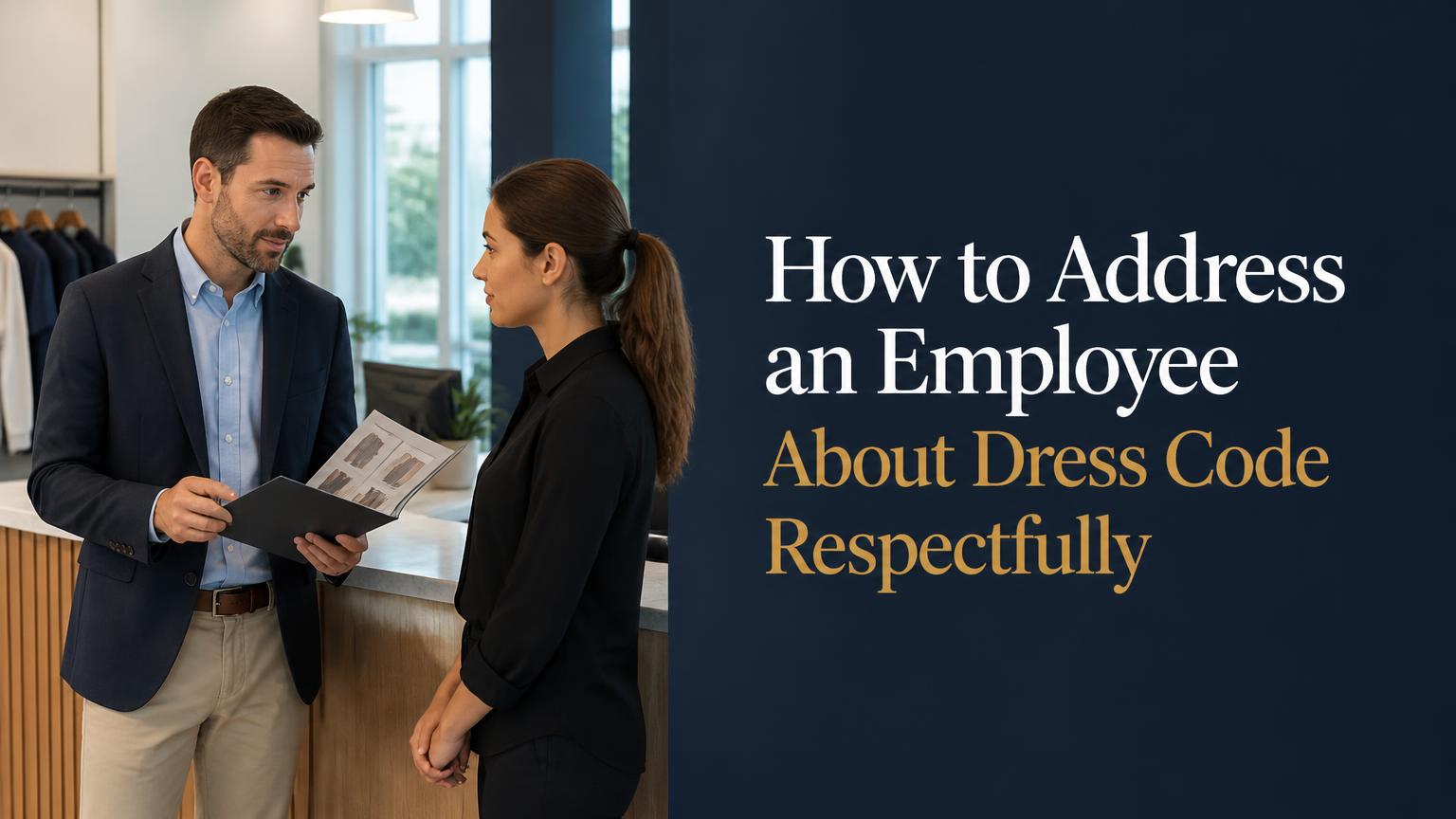
Dress code conversations can become uncomfortable quickly. An employee may feel judged personally, while a manager may worry about appearing intrusive, unfair, or inconsistent. Avoiding the conversation, however, can create confusion and make later action more difficult. The most respectful approach is to focus on clear workplace expectations, observable details, and the effect of the clothing on the job—not on the employee’s character, body, identity, or personal preferences. The steps below explain how to prepare, begin the conversation, respond fairly, and follow up without turning a correctable issue into a humiliating experience.
How to Address an Employee About Dress Code Respectfully
#1. Confirm That a Genuine Workplace Issue Exists
Before speaking with the employee, identify the actual concern. Review the written dress code or appearance policy and determine whether the clothing clearly falls outside an established expectation. If the policy is vague, inconsistently applied, or unknown to employees, the problem may be a communication or management issue rather than an individual failure.
Separate observable facts from personal preferences. “The employee is wearing a sleeveless top in an area requiring covered shoulders” is more useful than “The employee looks unprofessional.” Consider whether the clothing affects safety, hygiene, customer expectations, equipment use, or a clearly stated workplace standard. If it does not, ask whether the issue is truly necessary to address.
Also consider consistency. If several employees dress in similar ways but only one person is approached, the conversation may appear personal or discriminatory. Check how the standard has been applied in comparable situations, and correct broader communication problems before treating the matter as an isolated employee issue.
#2. Review the Policy and Any Relevant Circumstances
Read the applicable policy carefully before arranging the conversation. Confirm what it actually requires, whether the rule applies to the employee’s role or work area, and whether the organization provides examples of acceptable alternatives. Do not rely on memory, informal customs, or what a particular supervisor personally prefers.
Some circumstances may reasonably affect how the issue should be handled. An employee may need an accommodation, may be observing a religious practice, may have a medical reason for wearing particular clothing, or may be working under conditions that make a standard impractical. You do not need to ask for private details in front of others. Instead, create a respectful opportunity for the employee to raise relevant circumstances and involve HR or the appropriate internal resource when necessary.
Prepare the outcome you need before the meeting. You should be able to explain what standard applies, what change is expected, and when the employee should meet that expectation. A manager who has not clarified these points may unintentionally make the discussion sound like a personal opinion.
#3. Arrange a Private and Appropriate Conversation
Discuss dress code concerns privately, never across a shared workspace or in front of colleagues. Public correction can embarrass the employee and may turn a simple policy reminder into a lasting workplace conflict. Choose a private setting and allow enough time for a brief, calm exchange rather than raising the issue hurriedly between meetings.
Keep the opening neutral and direct. You do not need to create suspense or use exaggerated praise before mentioning the concern. Explain that you want to discuss a workplace expectation, then describe the specific observation and the relevant policy.
I’d like to discuss the dress expectations for your role. Today, I noticed that your clothing does not meet the policy requirement for covered shoulders in this work area. I want to explain the expectation and make sure you have an opportunity to raise any questions or relevant circumstances.
Use a calm tone and ordinary language. Avoid comments about the employee’s body, attractiveness, age, gender, personality, or presumed intentions. The purpose is to clarify a work standard, not to make the employee feel ashamed.
#4. Describe the Expectation Without Personal Judgment
A respectful conversation focuses on conduct and requirements rather than labels. Explain what was observed, identify the applicable standard, and state the practical reason for the expectation when one exists. For example, safety clothing may protect employees, while a customer-facing standard may support a consistent professional presentation. If the reason is simply an organizational policy, say that honestly instead of inventing a justification.
Avoid words such as “inappropriate,” “sloppy,” or “attention-seeking” unless you immediately explain the objective standard behind them. These descriptions invite argument about personality and intent. Specific language gives the employee something they can understand and change.
The issue is not a judgment about your personal style. The policy requires closed-toe shoes in this department, and the shoes you are wearing today do not meet that requirement. Please wear compliant footwear for future shifts.
If the employee asks whether the clothing is offensive or distracting, return to the written expectation and job-related reason. Do not repeat rumors or claim that unnamed coworkers complained unless that information is necessary and appropriate to share. Your responsibility is to communicate the standard clearly, not to build a case through embarrassment.
#5. Listen for Context and Respond Fairly
After explaining the concern, give the employee a genuine opportunity to respond. They may have misunderstood the policy, been told something different by another supervisor, experienced a wardrobe problem, or have a relevant circumstance that requires further consideration. Listening does not mean abandoning the standard; it means making sure you understand the situation before deciding what action is fair.
Ask an open but focused question such as, “Is there anything about this expectation or today’s situation that I should understand?” Then listen without interrupting. Do not demand personal information in front of others or press for details that belong with HR or another responsible resource.
Thank you for explaining that. I did not know the policy created a problem for you. Let’s involve HR so the situation can be reviewed appropriately, and in the meantime we’ll identify a practical option for today.
If the employee says the policy was never explained, acknowledge that possibility. You can still clarify what is expected, but it may be reasonable to treat the first incident as an educational conversation rather than immediately framing it as misconduct. Fairness includes considering both the employee’s actions and the organization’s responsibility to communicate its expectations.
#6. Agree on a Clear and Practical Next Step
The conversation should end with a specific understanding of what happens next. Tell the employee what clothing or equipment meets the standard, when the change is expected, and where they can find the policy. If the employee needs time to obtain suitable clothing, discuss a reasonable interim solution consistent with the workplace rules.
Do not leave the employee with an abstract instruction such as “dress more professionally.” Explain the relevant features instead: a collared shirt, clothing that covers a specified area, protective footwear, clean garments, or another clearly defined requirement. When possible, provide examples of acceptable options without prescribing a narrow personal style.
Going forward, please wear clothing that meets the covered-shoulder requirement when you work in this area. For today, you may use the spare uniform shirt, and I’ll send you the policy after our conversation so the expectations are clear.
Confirm the employee’s understanding and invite a final question. If the matter requires an HR review or accommodation process, explain who will follow up and avoid promising an outcome you cannot control. A clear next step reduces uncertainty and prevents the same conversation from becoming a series of vague reminders.
#7. Document the Conversation and Follow Up Consistently
Make a brief factual record of the conversation according to your organization’s normal practices. Note the date, the policy or expectation discussed, the observable concern, the employee’s response if relevant, and the agreed next step. Avoid editorial comments such as “does not care” or “has a bad attitude.” Documentation should help another responsible manager understand what occurred without relying on speculation.
Follow up according to the seriousness and history of the issue. A single misunderstanding may require only a reminder. A repeated failure after clear communication may call for a more formal process under established workplace procedures. Do not escalate simply because the first conversation felt uncomfortable, and do not ignore repeated noncompliance because you want to avoid another discussion.
Apply the standard consistently to comparable employees. If the policy proves unclear or impractical, raise that issue with the appropriate decision-maker rather than improvising different rules for different people. A respectful approach includes accountability, but it also requires managers to correct unclear systems and use established procedures fairly.
A Respectful Conversation in Practice
Imagine a customer-facing employee arrives wearing clothing that conflicts with a clearly stated uniform requirement. The supervisor checks the policy, confirms that the requirement applies to the employee’s role, and speaks privately rather than mentioning it during the morning huddle. The supervisor explains the specific issue, asks whether there is a reason the uniform cannot be worn, and offers an available spare garment for the current shift.
The employee explains that the required shirt was damaged and that they had not realized a replacement was available. The supervisor treats the incident as a practical problem, provides the spare shirt, and clarifies the process for obtaining another one. The supervisor then records the discussion as a policy reminder rather than describing the employee as careless.
A different situation may involve recurring noncompliance after several clear reminders. In that case, respectful management does not mean endless informal conversations. The manager can explain that the expectation has already been discussed, document the pattern, and follow the organization’s established performance or conduct process. The tone should remain factual and private, even if the next step is more formal.
The distinction is important: respectful communication is not the absence of standards. It means enforcing standards without humiliation, personal attacks, inconsistent treatment, or assumptions about motives.
What to Say When the Employee Reacts Defensively
An employee may feel embarrassed, disagree with the policy, or believe the standard is being applied unfairly. Do not respond by arguing about taste or insisting that the employee should not feel offended. Acknowledge the reaction, then return to the observable issue and the workplace expectation.
I understand that this conversation is uncomfortable. I’m raising it because the clothing does not meet the requirement for this role, not because I’m making a judgment about you personally. I’m happy to clarify the policy and hear any relevant concern.
If the employee says other people dress similarly, take the point seriously. Check the comparison rather than dismissing it. You might say that you will review how the policy has been applied, while still explaining what is expected for the current shift if the standard is clear and necessary.
That is worth checking, and I do not want the policy applied inconsistently. I’ll review the comparable situations with HR. For today, though, the requirement remains in place, so let’s discuss the available option for this shift.
If the employee becomes angry, keep the conversation brief and avoid matching the tone. State that you are willing to continue when the discussion can remain productive. If the interaction becomes threatening or violates workplace conduct expectations, follow the appropriate internal procedure. Respect does not require a manager to tolerate abuse.
When the Policy Itself Needs Improvement
Sometimes a dress code problem reveals an unclear or outdated policy. Rules such as “dress appropriately” or “look professional” may sound understandable but leave employees and managers to make inconsistent judgments. A stronger policy describes job-related requirements and gives practical examples, while allowing reasonable flexibility where possible.
Managers should raise recurring confusion with the person responsible for workplace policies. Useful questions include:
- Does the policy clearly distinguish safety requirements from appearance preferences?
- Does it apply consistently across roles, locations, and shifts?
- Are acceptable alternatives described?
- Do employees know where to find the policy?
- Is there a process for requesting an accommodation or clarification?
- Are supervisors using the same standard?
A policy should not be redesigned during an individual correction conversation. The immediate responsibility is to handle the current issue fairly. Afterward, however, patterns of confusion should be addressed at the organizational level so that employees are not judged by unwritten expectations.
Closing Thoughts
Addressing an employee about dress code respectfully requires both clarity and restraint. Confirm that a genuine policy issue exists, speak privately, describe observable facts, listen for relevant context, and agree on a practical next step. Avoid comments about personality, appearance, or intent, and apply the same standard consistently to comparable employees. The immediate goal is not to win an argument about clothing. It is to make the workplace expectation understandable, preserve the employee’s dignity, and handle accountability in a fair and professional way.