
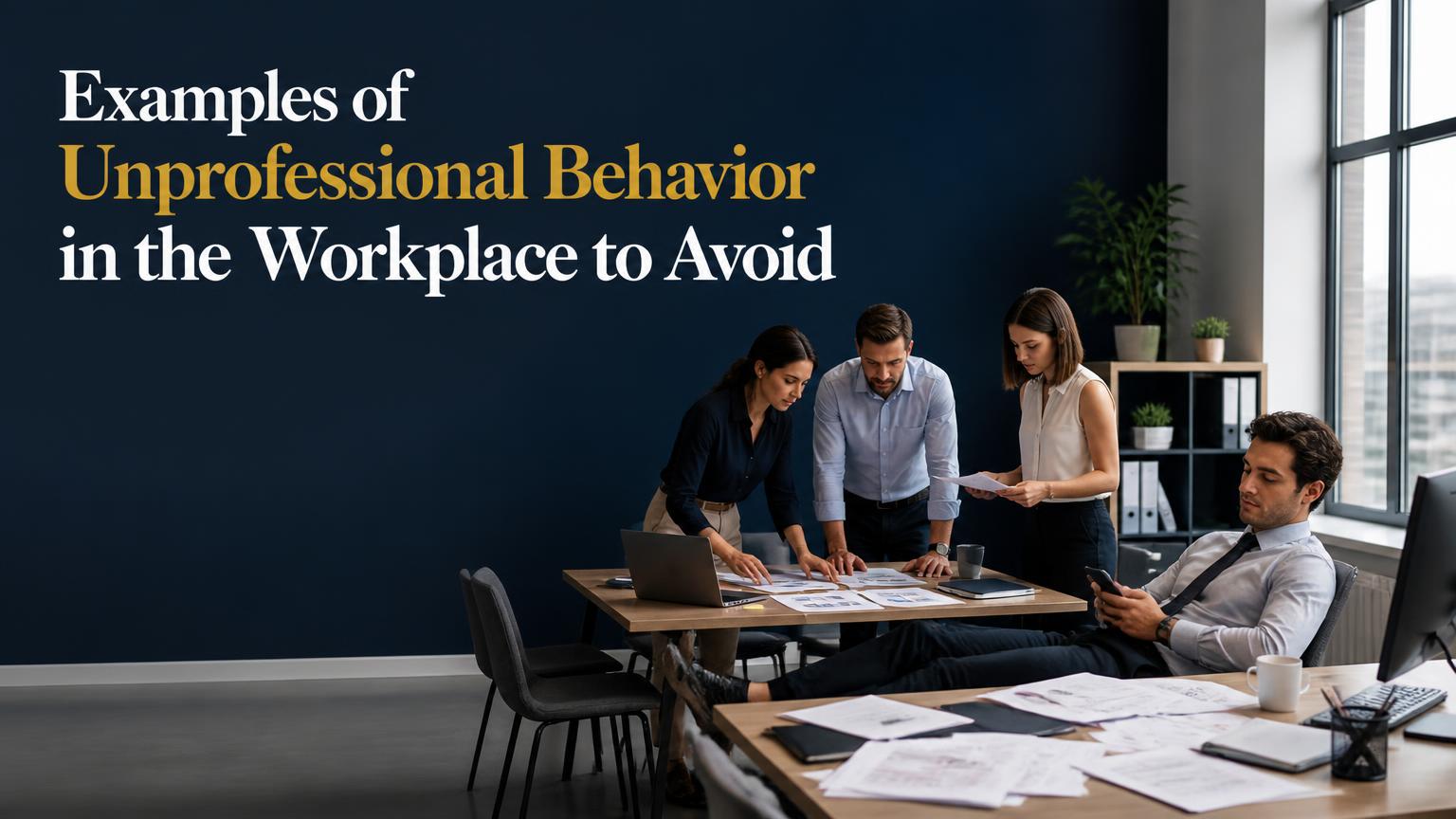
Workplace professionalism is not about sounding formal or avoiding every disagreement. It is about how people treat one another, handle responsibilities, communicate, and respond when problems arise. Unprofessional behavior can damage trust, slow work, embarrass colleagues, and create risks for the organization. Some conduct is obvious, while other problems appear as small habits that gradually become a pattern. The following examples help employees and managers recognize behavior that should be avoided and replace it with more respectful, reliable workplace practices.
Examples of Unprofessional Behavior in the Workplace—and What to Do About Them
#1. Repeatedly Arriving Late Without Explanation
Occasional lateness can happen because of traffic, family emergencies, or other unexpected events. Repeatedly arriving late without communicating, however, can shift work onto colleagues and make meetings, handoffs, and customer service less reliable. The issue is especially serious when the person treats lateness as unimportant or expects others to adjust around it.
Professional conduct means understanding the effect of attendance on the team. If a delay is unavoidable, notify the relevant person as soon as possible, provide a realistic arrival time, and make a plan to prevent repeated problems. Managers should address patterns privately and focus on the observable attendance issue rather than labeling someone as careless or disrespectful.
#2. Interrupting or Talking Over Colleagues
Interrupting can prevent people from explaining their ideas, answering questions, or raising legitimate concerns. It may occur during meetings, presentations, phone calls, or informal discussions. Even when the interruption is not intended to be rude, repeated talking over others can make conversations feel one-sided and discourage participation.
A more professional approach is to let the speaker finish, take notes if necessary, and ask a question afterward. Meeting leaders can help by establishing a clear speaking order or pausing when someone has been interrupted. A colleague who notices the pattern might say:
I’d like to hear the rest of Priya’s point before we move on. Priya, please continue.
This redirects the conversation without publicly attacking the person who interrupted.
#3. Using Disrespectful or Insulting Language
Name-calling, mocking comments, personal insults, and sarcastic put-downs have no place in a professional disagreement. They shift attention away from the work and toward the individual. Even comments presented as jokes can undermine trust when they target someone’s intelligence, background, appearance, communication style, or competence.
Professional criticism should address a decision, behavior, or work product rather than a person’s character. Instead of saying, “You clearly have no idea what you’re doing,” a colleague could identify the concern directly: “The figures in this section do not match the source report. Let’s review how they were calculated.” If insulting language continues, document specific incidents and follow the organization’s reporting or management procedures.
#4. Ignoring Emails, Messages, or Reasonable Requests
Not every message requires an immediate response, but consistently ignoring reasonable work communications can delay decisions and force colleagues to chase information. This is particularly disruptive when the person is responsible for approving work, supplying data, responding to customers, or completing a time-sensitive handoff.
Professional communication does not require being available every minute. It does require acknowledging important requests and setting expectations. A short response such as “I received this and will review it by Thursday” is often enough to keep work moving. If someone is overwhelmed, they should explain the delay, identify the priority, or ask for help rather than silently allowing the issue to remain unresolved.
#5. Failing to Take Responsibility for Mistakes
Everyone makes mistakes. Unprofessional behavior begins when a person hides an error, blames an uninvolved colleague, changes records to conceal what happened, or waits for someone else to discover the problem. These responses can turn a manageable issue into a larger operational or customer problem.
Taking responsibility does not mean accepting unfair blame for something outside your control. It means stating what happened accurately, explaining the immediate impact, and helping correct the situation. A useful response might be: “I entered the wrong date in the schedule. I have corrected the current version and am checking the related notices now.” Managers should distinguish an honest mistake from deliberate concealment and respond proportionately.
#6. Gossiping About Colleagues
Workplace gossip often involves sharing private information, speculating about someone’s motives, or discussing a colleague’s performance with people who are not responsible for addressing it. Even apparently harmless gossip can damage reputations, create factions, and make employees feel unsafe or watched.
A professional employee does not need to participate in every conversation. If a colleague begins speculating about someone’s personal life or work situation, redirect the discussion or decline to engage. If there is a legitimate performance or conduct concern, raise it with the appropriate manager or internal resource instead of circulating it informally. This distinction matters: reporting a work-related concern through a responsible channel is different from spreading rumors.
#7. Taking Credit for Someone Else’s Work
Claiming sole credit for a group project, presenting another person’s idea as your own, or failing to acknowledge important contributions undermines collaboration. It can also affect performance evaluations, promotion decisions, and future opportunities. Credit should reflect the actual work performed, not merely who spoke first or delivered the final presentation.
Professional employees name contributors accurately and correct misunderstandings when necessary. A manager can make this easier by asking who handled each part of a project and recognizing specific contributions. If someone takes credit for your work, keep records of drafts, assignments, and completed tasks, then address the issue calmly with the person or manager. Focus on clarifying contributions rather than accusing someone of having bad character.
#8. Misusing Workplace Technology or Resources
Excessive personal use of work devices, inappropriate websites, unauthorized software, careless handling of confidential files, and using company resources for improper purposes can create practical and security problems. The exact boundaries depend on the organization’s policies, but employees should not assume that convenience makes questionable use acceptable.
Before using workplace technology for personal or unusual purposes, check the applicable policy or ask a supervisor. Keep sensitive information in approved systems, use strong access practices, and avoid sending work materials to personal accounts without authorization. Managers should explain expectations clearly and address violations based on the conduct and its impact, not through public embarrassment or inconsistent enforcement.
#9. Arriving Unprepared for Meetings or Assignments
Preparation is part of professional reliability. Arriving at a meeting without reviewing the agenda, missing essential background information, or submitting work that ignores clear instructions can waste other people’s time. A single oversight may be understandable, but a repeated pattern suggests that the person is not managing responsibilities effectively.
Preparation does not mean creating unnecessary work. It may involve reading a short briefing, bringing requested figures, identifying decisions that need to be made, or testing a presentation before delivery. If you cannot complete the preparation, communicate that before the meeting and explain what you need. Managers can improve outcomes by sending clear agendas, defining the purpose of meetings, and making responsibilities visible.
#10. Refusing Reasonable Feedback
Professional growth requires the ability to hear concerns without immediately becoming defensive, hostile, or dismissive. Refusing all feedback can include interrupting the person giving it, arguing about every detail, treating questions as personal attacks, or insisting that no change is necessary despite clear evidence of a problem.
Accepting feedback does not require agreeing with every opinion. A constructive response is to ask for a specific example, clarify the expected standard, and consider what action is appropriate. For example:
I understand the concern about the missed handoff. Could you show me which information was missing so I can correct the process for the next project?
Managers should give feedback privately, describe observable behavior, explain its impact, and allow the employee to respond.
#11. Creating Conflict Through Aggressive Communication
Raised voices, threatening gestures, hostile messages, public confrontations, and deliberately intimidating behavior can make ordinary disagreements feel unsafe. Strong disagreement is not automatically unprofessional; people may challenge decisions, question priorities, or defend their work. The problem is the manner used to express the disagreement and the effect it has on the working environment.
A professional response states the concern firmly without personal attacks or threats. If a conversation becomes heated, pause it and move to a private setting or involve a manager. Someone who feels intimidated should record the specific behavior, date, witnesses, and work impact, then use appropriate internal reporting channels. Threats or immediate safety concerns require prompt attention through the organization’s established process.
#12. Ignoring Boundaries and Personal Privacy
Unprofessional behavior can include reading another person’s messages, sharing private information, pressuring colleagues to discuss personal matters, repeatedly contacting someone outside agreed working hours, or continuing a conversation after the other person has clearly asked for space. Workplace relationships may be friendly, but friendliness does not remove the need for consent and discretion.
Respect boundaries by using work channels appropriately, limiting access to information you are authorized to see, and accepting a colleague’s decision not to discuss personal matters. Managers should be especially careful not to pressure employees to disclose private information unrelated to their work. If a boundary issue affects collaboration, describe the conduct specifically and state the change needed rather than making broad accusations about the person’s motives.
How to Respond When You Observe Unprofessional Behavior
The best response depends on the seriousness, frequency, and impact of the conduct. A minor, one-time interruption may be handled with a brief redirection. Repeated disrespect, harassment, threats, retaliation, privacy violations, or conduct that affects safety should be documented and raised through the appropriate management, HR, compliance, or other internal channel.
Start with observable facts. Record what was said or done, when it occurred, who was present, and how it affected the work. Avoid writing conclusions such as “Jordan is dishonest” when the evidence is that “Jordan submitted the report under their name even though the documented assignment listed three contributors.” Specific records are more useful than labels.
When it is reasonable and safe, address the behavior directly and privately. Explain the conduct, its effect, and the expectation going forward. A simple conversation might sound like this:
When the discussion continued after I said I needed to leave, I felt pressured to stay beyond the agreed meeting time. In future, please send any remaining questions by email or schedule another discussion.
If the behavior continues, or if direct discussion is inappropriate, involve the person responsible for handling the issue. Employees should not be expected to confront conduct that involves threats, significant power differences, discrimination concerns, or a risk of retaliation.
How Managers Can Prevent Unprofessional Conduct
Managers influence workplace standards through what they address, what they ignore, and how consistently they apply expectations. A team does not need a rule for every possible interaction, but employees should understand basic standards for communication, attendance, confidentiality, meeting conduct, feedback, and accountability.
Set expectations in practical language. Rather than telling employees to “be professional,” explain what that means in the setting:
- Arrive prepared and notify the team about delays.
- Challenge ideas without insulting people.
- Give credit for contributions.
- Respond to time-sensitive requests or explain when you will respond.
- Raise concerns through an appropriate channel.
- Protect private and confidential information.
When a problem occurs, respond to the behavior promptly and proportionately. A private coaching conversation may be suitable for a correctable habit, while a serious or repeated issue may require formal procedures. Managers should also examine whether unclear roles, unrealistic workloads, poor communication systems, or inconsistent standards are contributing to the problem. Accountability works best when expectations are clear and applied fairly.
When Behavior Requires a Different Approach
Some conduct should not be treated as ordinary workplace friction. Threats, stalking, serious harassment, retaliation, deliberate disclosure of confidential information, or behavior that creates an immediate safety concern may require prompt escalation. Do not attempt to investigate complex or serious allegations alone, and do not promise a colleague a particular outcome.
There are also situations where the behavior may reflect a misunderstanding, cultural difference, communication style, or an unclear workplace expectation rather than deliberate disrespect. That does not mean the impact should be ignored. It means the response should focus on clarification, specific examples, and a fair opportunity to correct the conduct. If the issue involves protected personal information, discrimination, harassment, or potential legal obligations, consult the appropriate internal resource rather than relying on informal advice.
Closing Thoughts
Examples of unprofessional behavior in the workplace range from small habits, such as interrupting or ignoring messages, to serious conduct involving intimidation, privacy, or retaliation. The practical response is to separate observable behavior from assumptions, consider whether a pattern exists, and address the issue through a fair and appropriate channel. Employees can contribute by communicating clearly, accepting responsibility, respecting boundaries, and documenting serious concerns. Managers can reinforce those standards through consistent expectations and proportionate action. Professionalism is built through repeated choices that make work more respectful, reliable, and accountable.